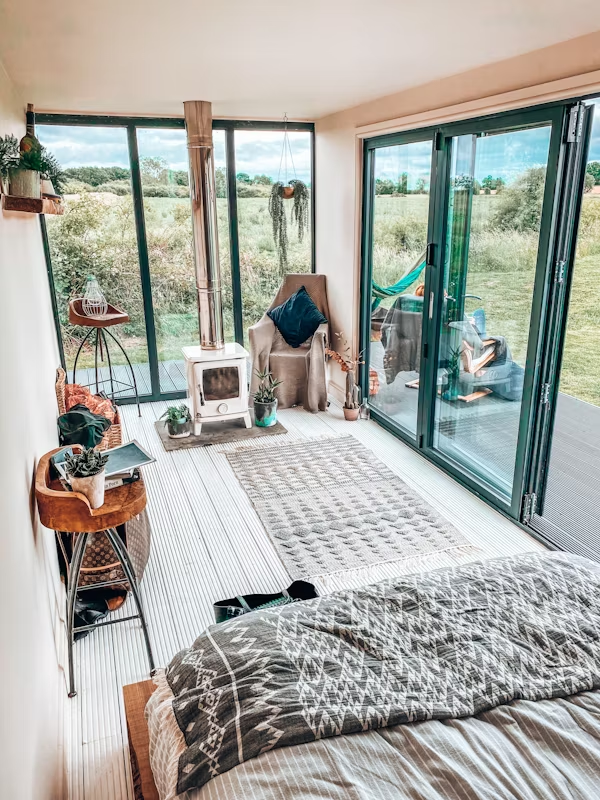
Imagine this: It’s a cold winter evening, but you’re sitting in your conservatory, wrapped in the comforting glow of a crackling log burner, watching the frosty garden outside.
For too long, the conservatory has been labelled a “summer room.” However, with modern heating solutions, you can now enjoy your bright, expansive space 365 days a year.
The short answer is a resounding: Yes, you absolutely can install a log burner or wood-burning stove in your conservatory.
However, unlike a standard room, a conservatory installation requires specific safety and technical considerations to comply with UK Building Regulations (specifically, Approved Document J). At Reliant Windows, we believe that an extension should be safe, compliant, and comfortable, which is why we’ve created this definitive guide.
The Three Pillars of a Safe Installation
When installing a heat source like a log burner into a glass or lightweight structure, safety is the number one priority. All UK installations must meet the requirements of Document J-the key Building Regulation for combustion appliances.
Here are the three essential components you must plan for:
1. The Flue and Chimney System (The Twin-Wall Requirement)
Since a conservatory does not have a brick chimney, you must install a twin-wall flue system.
-
Why Twin-Wall? This insulated, double-skinned metal pipe keeps the exterior cool, allowing it to safely pass through the conservatory roof and maintain a safe distance from combustible materials like roof panels, glass, or frames.
-
Routing: The flue must exit through the roof. It is often safest to site the stove against the main house wall to allow the flue to be secured and supported.
-
Height: The flue must extend to a specific height to ensure proper draw and smoke dispersal. This is usually at least 1 metre above the highest point of the roof (e.g., the house guttering or the conservatory’s ridge).
2. The Non-Combustible Hearth
A log burner must always sit on a fireproof base called a hearth. This protects the floor from heat transfer and falling embers.
-
Material: The hearth must be made of a non-combustible material like slate, stone, granite, or reinforced glass.
-
Thickness & Size: Your hearth must be at least 12mm thick and extend a minimum of 300mm in front of the stove and 150mm to either side.
3. Ventilation and Air Supply
A stove requires oxygen to burn safely and effectively.
-
For stoves with a nominal output of 5kW or less, the air leakage of a modern conservatory is often sufficient.
-
For stoves over 5kW, a dedicated, permanent air vent (known as a primary air supply) must be installed to ensure enough fresh air for combustion and to prevent potentially dangerous pressure changes in the room.
Do I Need Planning Permission or Building Control for a log burner?
This is the most critical question for homeowners in the West Midlands.
-
Planning Permission: You generally do not need separate planning permission to install a log burner in a domestic conservatory. However, if you live in a Listed Building or a designated Conservation Area, you must check with your local authority.
-
Building Control (The Certification): The work is classified as ‘controlled work’ and must be signed off by your local council’s Building Control department OR by a competent person scheme, such as HETAS.
Reliant’s Top Advice: Always Use a HETAS Installer
A HETAS-certified installer is trained and legally allowed to self-certify their work. This is the simplest, safest, and most cost-effective path. They will issue a HETAS Certificate of Compliance, which is your proof that the installation meets all legal safety requirements and is crucial if you ever sell your home.
Practical Benefits of a Conservatory Log Burner
Beyond solving the cold-room problem, a log burner offers powerful advantages:
| Benefit | Description |
| Year-Round Usage | Instantly transforms your conservatory into a practical, warm space for winter dining, reading, or family gatherings. |
| Energy Efficiency | Log burners are generally much more cost-effective to run than electric heaters or extending your central heating system to the conservatory. |
| Stunning Focal Point | The stove becomes an irresistible, beautiful design feature that elevates the style and ambiance of the entire extension. |
| Increased Home Value | A fully usable, well-heated conservatory that complies with regulations is a significant selling point for potential buyers. |
Summary: Your Next Steps to a Cosy Conservatory
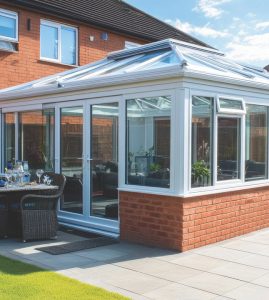
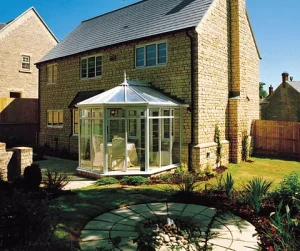
A log burner is the perfect addition to make your Edwardian, Victorian, or Gable End conservatory a truly year-round living space.
If you are considering this investment, your best first step is to consult with a specialist. Our team at Reliant Windows can advise on the right conservatory structure-including options for highly efficient insulated roofs-to pair with your heating choice, giving you the best result.