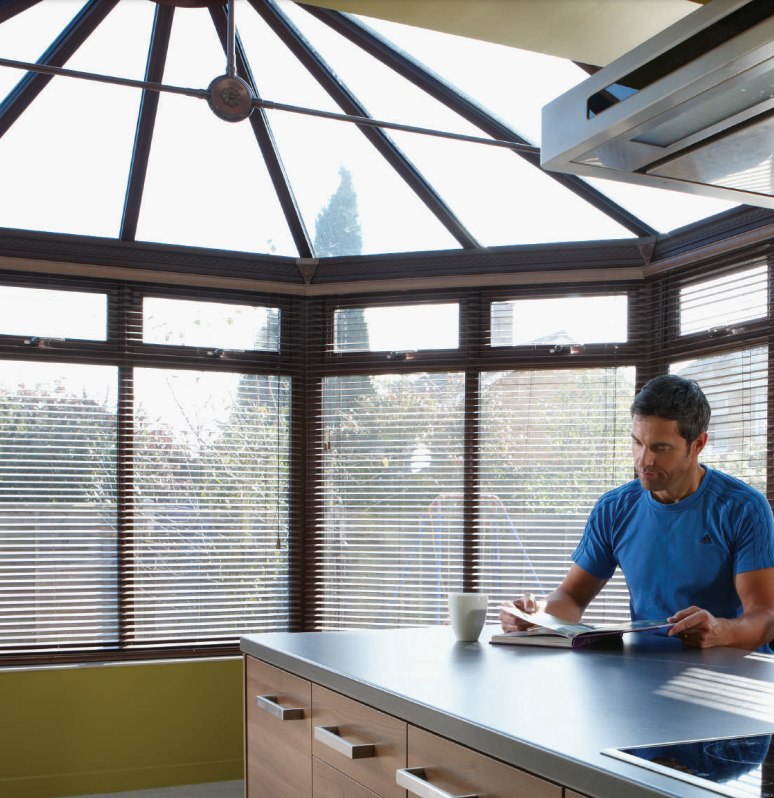
Adding a conservatory to your home can be a fantastic way to expand your living space and bring in more natural light. However, before you envision your dream extension, one of the most common and important questions homeowners ask is: “Do I need planning permission for a conservatory?” The good news is that, in many cases, the answer is no, thanks to “permitted development” rights.
However, it’s not always straightforward. Understanding the rules can save you time, money, and potential headaches. Let’s break down what you need to know.
Understanding Permitted Development for Conservatories
In England, many home extensions, including conservatories, can be built under permitted development rights, meaning you don’t need to apply for planning permission from your local council. This applies as long as your proposed conservatory adheres to specific conditions and limits.
Key Conditions for Permitted Development:
Footprint Rule
The conservatory, combined with any other extensions or outbuildings, must not cover more than 50% of the land around the ‘original house’ (meaning the house as it was first built, or as it stood on July 1, 1948).
Frontage Restriction
It must not extend forward of the front or side of the ‘original house’ that faces onto a public road. Front extensions are generally not considered permitted development.
Rear Extensions
-
For semi-detached houses, a rear conservatory can extend up to 6 metres beyond the original rear wall.
-
For detached houses, this limit extends to 8 metres.
-
If your rear extension is more than 4 metres, a neighbour consultation scheme applies, requiring you to inform your local planning authority.
Side Extensions
-
Cannot be wider than half the width of the ‘original house’.
-
Must be single-storey and under 4 metres in height.
Height Restrictions
-
The conservatory cannot be higher than the highest point of the existing roof.
-
Eaves and ridge heights must not be higher than the existing house.
-
If within 2 metres of a boundary, the eaves height must be 3 metres or less.
-
A rear conservatory cannot exceed 4 metres in height.
When You Will Need Planning Permission
-
If your property is located in a Conservation Area, National Park, Area of Outstanding Natural Beauty, or a World Heritage Site, you may need permission. In these areas, there might be restrictions on the materials, for example, exterior cladding may not be permitted.
-
Any changes to a Listed Building, including adding a conservatory, will require Listed Building Consent.
-
Local councils can issue an Article 4 Direction to remove permitted development rights in specific areas. It’s crucial to check with your local planning office for any such directives that might affect your property.
-
Your property deeds might contain restrictive covenants that prevent certain types of development or building work. Always consult your solicitor if you believe one applies.
-
As noted, extending forward of the house’s front or side that faces a road is generally not permitted development.
Understanding Building Regulations
Even if you don’t need planning permission, your conservatory must comply with Building Regulations. However, many conservatories are exempt if they meet these specific guidelines:
It has a floor area of not more than 30 square metres.
It’s built at ground level.
It is separated from the house by an external wall, windows, or doors.
It has a heating system independent of the house with its own controls (e.g., a standalone electric radiator).
Its glazing and fixed electrical installations comply with relevant building regulations.
When Building Regulation Approval IS Required
-
If your conservatory is open-plan to the house or is more than 30 square metres in floor area, it will require building regulation approval. In such cases, it must be as energy-efficient as the rest of the house.
-
Changing a conservatory roof from glass or polycarbonate to a solid tile roof also requires building regulations approval, as it significantly changes the structure’s nature to a single-storey extension.
Party Walls and Boundaries
Building near a boundary can involve additional considerations. The Party Wall Act 1996 applies if your conservatory is built up to a boundary, or if a wall or foundations sit on or near a boundary. In such cases, you are legally required to notify your neighbour and seek their approval before starting work.
A conservatory less than 3 metres high can be built to the edge of the boundary at the side and back, provided it doesn’t cover more than 50% of the area around the house.
The Takeaway
While many conservatories fall under permitted development, it’s always best to be absolutely sure. Before you begin any work, always check with your local council’s planning department for specific guidance relevant to your property. A reputable conservatory installer will also be able to advise you on planning and building regulations compliance, ensuring your project runs smoothly from start to finish.